


The genesis of my ‘optimal’ health journey began when I listened to Joel Salatin, the godfather of regenerative farming, on Joe Rogan in 2020, during the early stages of the COVID-19 pandemic.
Hearing Joel talk about the modern, factory-farmed, industrial food sludge complex disgusted me. Yet, his explanation of regenerative farming drew me in and excited me.
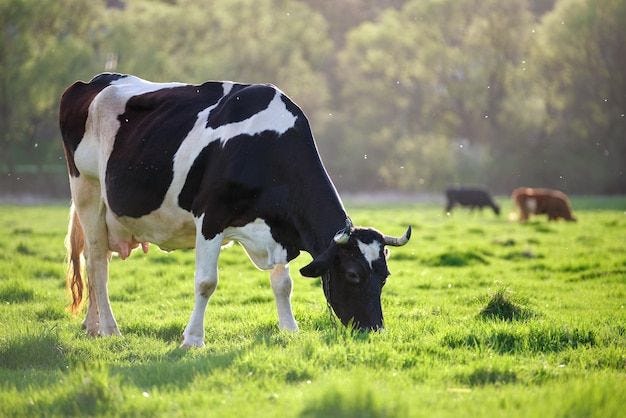
The simple, highly synergistic systems of farm animals working together made total sense. It made sense for cattle to be on pasture, foraging for natural, wild grasses, exposed to sunlight and the elements.
Pigs running around in the forest, effectively clearing land, rummaging for acorns, grubs, or whatever they could find, and chickens following right behind searching for maggots in the larger animals’ dung.
COVID woke most people up to the medical/food establishment: the lies, the corruption, the greed, etc. COVID made me tired of the fake garbage, tired of eating junk made in a factory; I wanted the real stuff.
I soon started buying meat from Polyface Farms (Joel Salatin’s farm) at a local organic butcher. Soon after tasting nutrient-dense meat for the first time in my life, and listening to Dr. Natasha Campbell-McBride, the founder of the GAPS diet and a major proponent of raw milk, I started searching for some real milk, specifically raw grass-fed A2 milk.
I had always loved milk growing up, but had stopped drinking it after becoming ‘lactose intolerant’ from my Crohn’s.
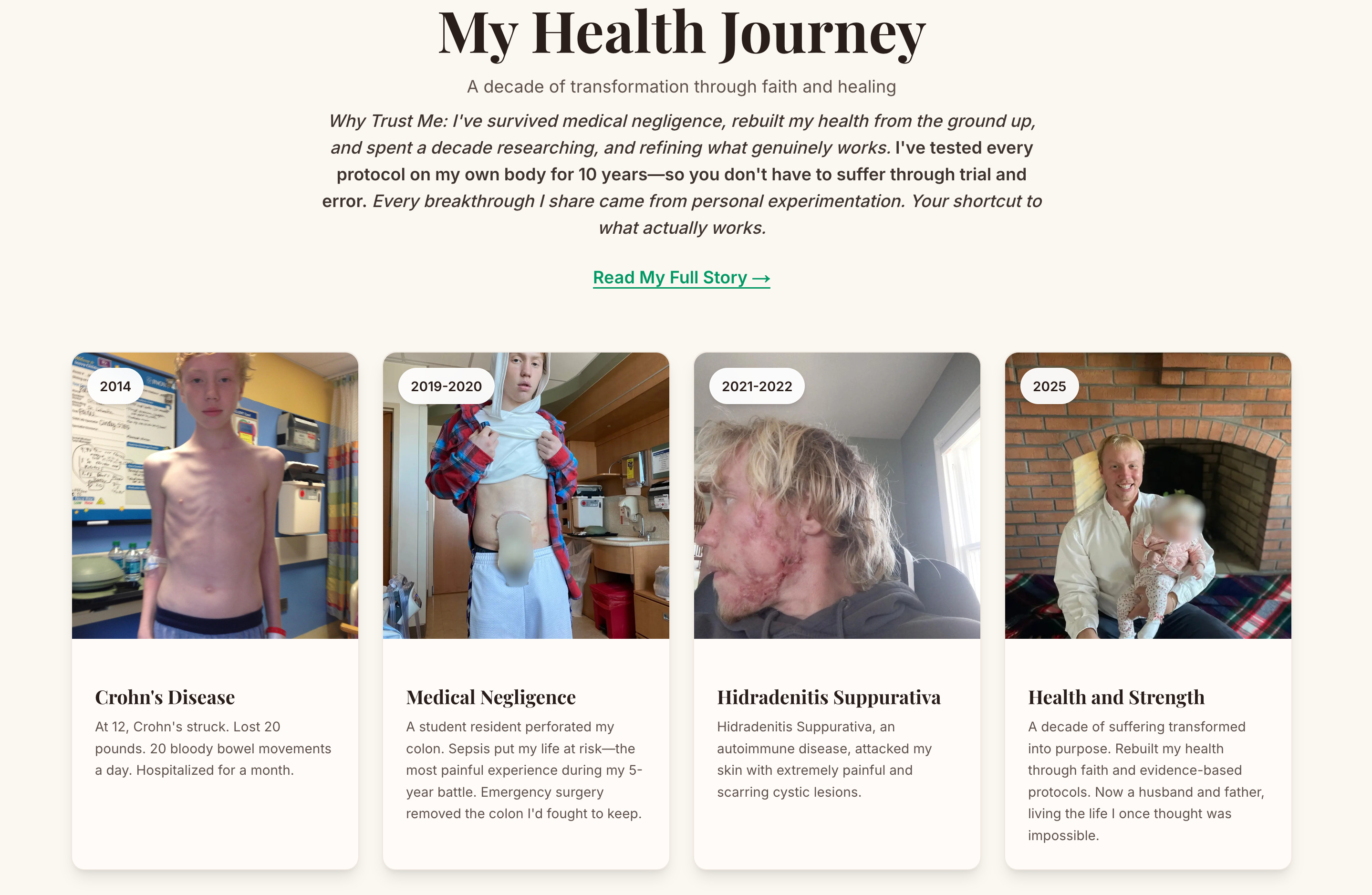
Book your free 20-minute consultation at Little Way Coaching and get personalized guidance from someone who’s been through severe health challenges and knows what it takes to get unstuck!
Visit littlewaycoach.com to learn more
Yet, the GAPS diet explained that as a function of ‘dead,’ highly processed, pasteurized, homogenized, factory-farmed milk, and that raw milk, cultivated with farming practices akin to Joel Salatin’s, was well tolerated and beneficial for people with autoimmune conditions like Crohn’s.
Soon enough, after finding my supplier, I was drinking 4 gallons a week of whole raw milk. I had never tasted something so nutrient-dense in my life.
Side note: I still drink 4 gallons a week!
You can imagine the shock and awe coming from someone who grew up on Pop-Tarts, Doritos, Oreos, and outright garbage, to then eating meat and drinking milk as God intended.
Dead Milk?
Your run-of-the-mill grocery store milk is dead. It’s stripped of its beneficial nutrients, denatured from high-temperature pasteurization, and its natural bacterial profile has been destroyed.
Chances are, unless you intentionally bought quality, proper grass-fed milk, it comes from a factory-farmed cow. The living conditions for these cattle are subpar: living in crowded indoor pens on slabs of concrete, under fluorescent blue light.
Their crowded, unsanitary living conditions require them to use frequent antibiotics. Growth hormones are given to increase output. Rather than grasses and natural foraging, these cattle are fed abhorrent amounts of soy, corn, and grains (most of which are also factory farmed, glyphosate-rich!).
Under no circumstances are these cows healthy; in fact, their quality of life is rather crap, with a far higher chance of complications than pasture-raised cattle.
Complications such as reduced rumen movement (gut motility—think SIBO for cows!), dehydration, diarrhea, liver abscesses, endotoxemia from bacterial overgrowth, and laminitis (degradation of the cow’s hoof).1
Let’s call a spade a spade: these cows are not healthy, they are not treated properly, and the food we get from this is far from their natural state.
I am not some PETA advocate, but man, when did it become normal to abuse our food? How does this serve us in any way? The consequence is a disturbingly low-quality, undernourishing food. It’s total garbage!
To add insult to injury, the factory farmed milk is pasteurized, homogenized, and denatured, reducing its naturally nourishing benefits even more, rendering it DEAD.
Seek real milk!
Here is what I look for in my raw milk: their cows naturally contain the A2 milk protein, they are pastured and grass-fed, ruminate outdoors, and are not given antibiotics or growth hormones. Basically, they are how cows are supposed to exist...
A2/A2 protein is the same protein that your mother’s milk was made of; it’s naturally easier for humans to digest, as it lacks the A1 protein. The A1 protein has been linked to digestive issues such as slow gut motility and gut inflammation resulting from the breakdown of a peptide called BCM-7. Many also attribute A1 protein to their acne breakouts. Not all raw milk is A2, so make sure to find one that is. 2 3
Lactoferrin is a heat-sensitive molecule naturally found in raw milk. It is an effective antimicrobial, warding off microbes like E. coli, Salmonella, and Clostridium. It helps boost beneficial bacteria like Bifidobacteria and Lactobacilli. It’s anti-inflammatory and reduces excessive iron in the body.
Overall, it’s a powerful protein and is not found in conventional dairy due to pasteurization, one I find to be the most important in raw milk. On average, a liter of raw milk contains 182.4 mg/L. 4
If you’re tired of guessing and want help getting to the root cause of your issue, try my Root Cause AI found on my website: littlewaycoach.com. It pairs great with the root cause quiz!
Immunoglobulins are immune-supporting compounds in raw milk. IgG, the most prevalent, can help prevent detrimental microbes within the GI system from attaching to the gut lining and spreading.
Raw milk contains beneficial probiotic bacteria and enzymes that support the digestion of lactose, enhance the diversity of the microbiome, and have even been shown to help with asthma and allergies! Anecdotally, many people with lactose intolerance have no issues drinking raw milk compared to pasteurized milk; this definitely was the case with me.
Altogether, raw milk is amazing; it is truly a living food. Pasteurization destroys many of the beneficial compounds, like probiotic bacteria, lactoferrin, immunoglobulins, and enzymes.
There are some great websites to find a local farmer who sells raw milk, like getrawmilk.com or rawmilkinstitute.org.
Look for a farmer who takes care of his animals, prioritizes grass-fed A2/A2 cows, doesn’t continually use antibiotics, and is absolutely hormone-free. Visit your farm and get to know your farmer: few things are as rewarding as knowing where your food comes from!
Lastly, If you can’t find raw milk, but still want some of the benefits, I like Vital Whey a lot. I recently found it on Fullscript while looking for lactoferrin supplements. Even though it’s not raw milk, it’s processed extremely gently and without heat, so compounds like lactoferrin, immunoglobulins, and natural enzymes are preserved.
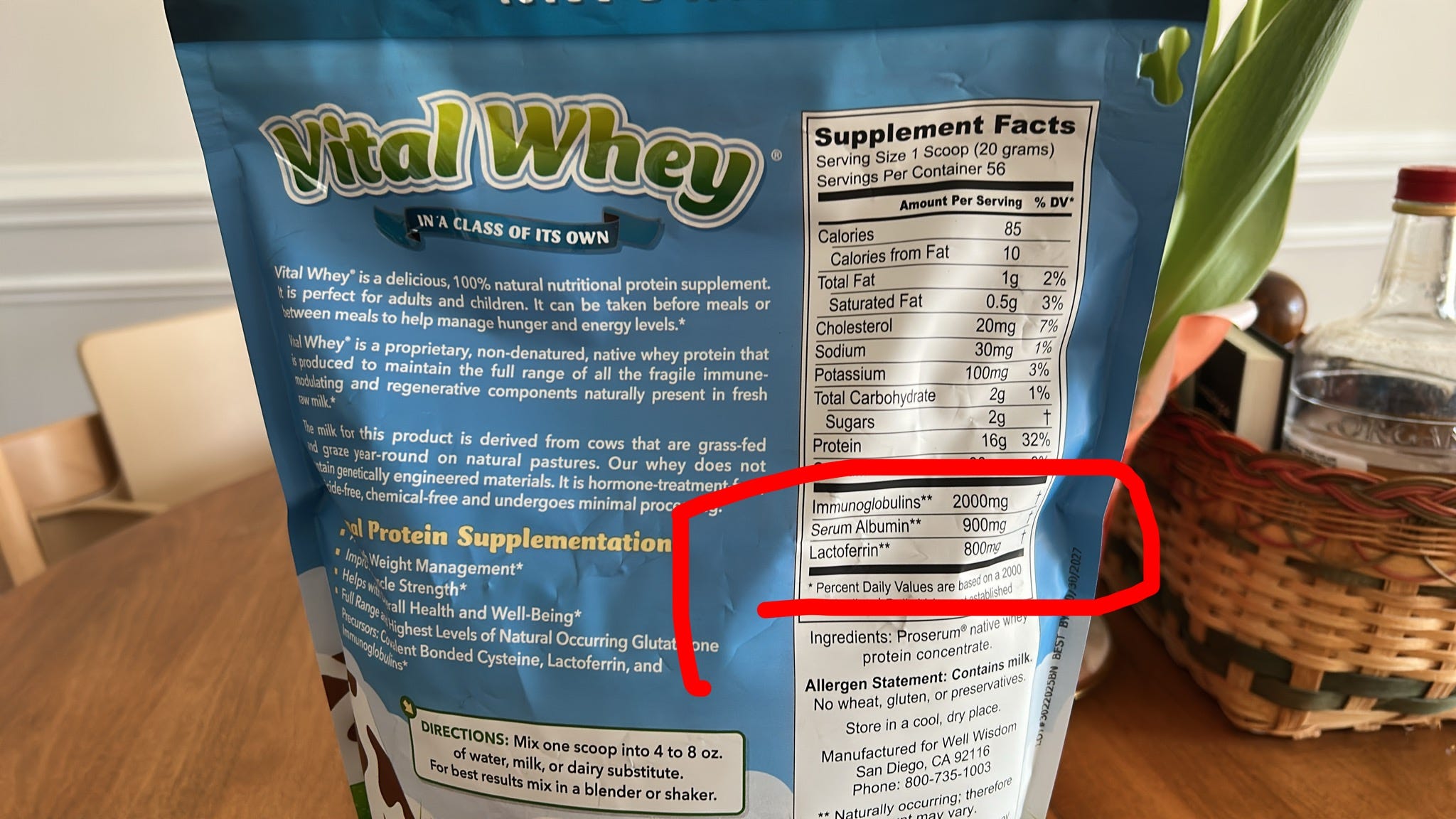
Not only are they preserved, but a scoop of this whey protein has 800mg of lactoferrin!!! Thats like a megadose of lactoferrin, and almost 8x more than a liter of raw milk. I usually recommend this dose to clients with immune, or gut issues.
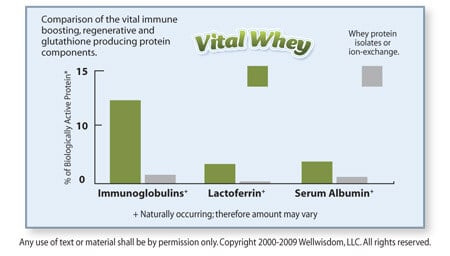
It’s also grass-fed and pasture-raised year-round. I actually take it daily along with my raw milk and kefir.
As someone who loves raw milk, but realizes most cant get it, this was something I was very excited to share.
Pick it up on my Fullscript, the leading GMP/Practitioner recommended supplement seller in America, for 25% off!
Use this link or click any of the above to bring you directly to the product: https://us.fullscript.com/plans/sklein1767385193-raw-milk-alternative
Till next time,
Scott
Disclaimer: This content is for informational purposes only and should not be considered medical advice. All opinions expressed are my own and not intended to replace professional medical guidance.
https://pmc.ncbi.nlm.nih.gov/articles/PMC4247954/
https://www.sciencedirect.com/science/article/pii/S0958694624002565
https://pmc.ncbi.nlm.nih.gov/articles/PMC9094626/
https://pmc.ncbi.nlm.nih.gov/articles/PMC3345850/
Full Script store doesent work
Sounds a little obsessive, 4 gallons a week?